Water Extraction in Alpine, CA
Standing water spreads into pad, baseboards and drywall faster than most people expect, so the extraction crew pumps it out first and meters the wet zone before any drying equipment is set down in the room.
(888) 450-9281Pump out the water now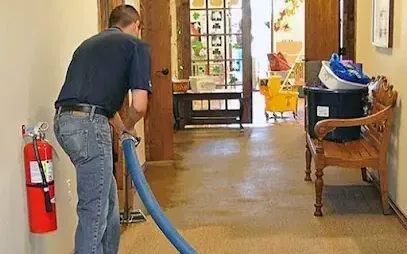
Rain in Alpine averages 16.05 inches a year and falls mostly from November to March, with big swings from one year to the next, so extraction here is mostly a storm-season job. Leaks do not follow the calendar, though, and a failed hose or tank in July puts water on a floor just the same. The extraction crew starts with the water itself, and everything else waits until it is out. Structural drying follows once the floor is clear.
How water extraction and removal is handled, step by step
Call
Describe the water and where it is sitting.
Setup
Pumps and extractors go to work in the wet rooms.
Records
Photos and readings are logged for the claim.
Handoff
Drying equipment is placed and monitored.
Why the water comes out first
Wet drywall, pad and baseboards keep drawing moisture upward for as long as the floor stays flooded. Removing the pool cuts that off. Pumps handle depth, and wands and weighted extractors lift what has soaked into carpet and hard flooring, which a mop or shop vacuum will never reach. Every pass is followed by readings, so the crew knows what is still wet.
Standing water in the house? The extraction crew works day and night.
Ask about the pump-outWhat gets pumped, lifted or checked
Standing water goes first, then the carpet pad that cannot dry in place. Carpet is often lifted and set aside. Hardwood, tile and laminate get a closer look for water trapped under planks or in the subfloor. Cabinets, doors and the bottoms of walls are metered and, where needed, opened so the cavity can be reached.
Wet season and dry season
February is the wettest month at 3.65 inches on average, with January close behind at 3.21 inches, so storm runoff and roof water cluster in the winter months. June through August are very dry, which is when supply hoses, water heaters and slow pipe leaks account for most of the water on the floor. Either way, the work is the same, and heavy storms get their own page on storm runoff cleanup.
First steps when water extraction and removal shows up
Find the water
The crew locates where water is pooling and checks whether it has run under baseboards, cabinets or flooring.
Pump it out
Pumps pull standing water, then wands and weighted tools draw it from carpet, pad and hard floors.
Map the wet zone
Moisture meters and a thermal camera show how far the water traveled into walls and subfloor.
Start the drying
Soaked pad and loose material come out, and air movers and dehumidifiers take over.
What does water extraction and removal cost in Alpine, CA?
Extraction in Alpine runs $1,200 to $3,500 for one or two rooms, $3,500 to $6,500 for several rooms or a hallway, and $6,500 to $12,000+ for contaminated water or a whole level. Room count, depth and water category set the final figure.
One or two rooms
- Pump-out
- Moisture readings
- Pad removal
Several rooms or a hallway
- Heavier pumping
- Wall cavity checks
- Drying plan
Contaminated or whole level
- Category 3 handling
- Debris removal
- Containment
What moves the number
Ranges are typical, not a quote. Water category, square footage, material class and how fast drying started move the total most. Run the water damage cost calculator for a closer range.
Water extraction and removal across Alpine and nearby communities
Extraction crews work throughout Alpine: homes and small businesses around the Alpine Boulevard commercial district, properties on both sides of Interstate 8, rural parcels with horse ranches and small farms, and the northern slopes. Both ZIP codes, 91901 and 91903, are covered, and the crew carries pumps and hoses straight to whichever room is wet.
The same service nearby: water extraction and removal in Ramona, Julian, Valley Center.
Water damage restoration in Alpine › · every community covered
Related water damage services nearby
Water Extraction and Removal questions, answered
How soon does extraction need to start?
As soon as possible. Water keeps moving into drywall, pad and framing, and wet materials can begin to grow mold within 24 to 48 hours. Pumping stops the spread, and drying then finishes the job.
Can a shop vacuum do the job?
A shop vacuum handles a small spill at best. Water that has soaked into carpet pad, subfloor or the bottom of a wall needs truck-mounted or weighted extractors, plus meters to prove what is still wet.
Does the carpet have to be thrown out?
Not always. Clean water caught early often lets carpet be lifted and dried while the pad is replaced. Sewage or long-standing water changes that, and the crew explains which applies before anything is removed.
Do heavy storms really flood homes here?
Alpine rainfall swings widely from year to year, and about 42.7 days a year bring measurable precipitation, mostly from November to March. A heavy storm after a dry run of years can still push water indoors.
What happens after the water is out?
Moisture readings set the next step. Wet pad and loose material are removed, and air movers and dehumidifiers run until the structure reaches its dry standard. The report and photos support the insurance claim.
Get the water out before it spreads
Call now to describe the water, and the crew explains what comes out and what can stay.
(888) 450-9281Call to remove