Slab Leak Water Damage in Ramona, CA
A pinhole in the copper under a slab soaks flooring from below long before a stain shows. The mitigation team lifts what is wet, dries the concrete and wall bottoms and records every reading for the claim.
(888) 450-9281Report the warm spot in the floor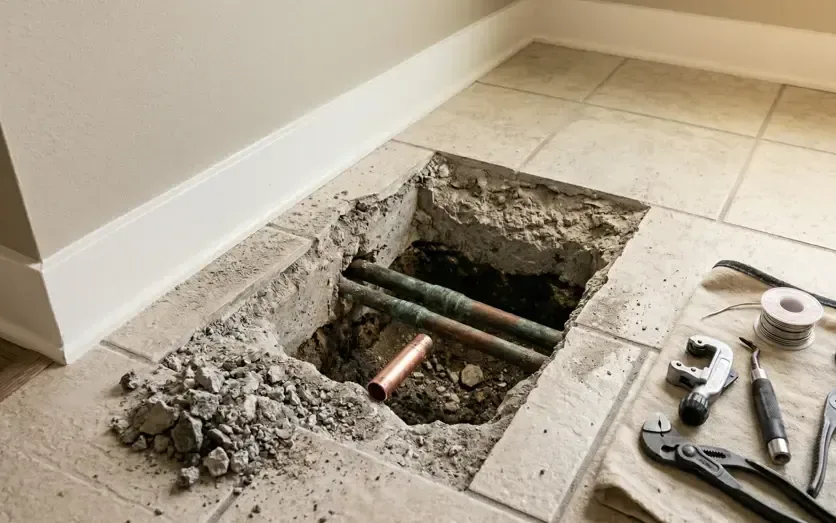
A slab leak is a supply pipe failing inside or under the concrete floor. Most local housing went up in 1970 or later, and many of those homes sit on slabs with copper running underneath. Street pressure, hot water and concrete that moves through big daily temperature swings wear that copper thin until a pinhole opens, and the water comes up through the floor.
How slab leak water damage is handled, step by step
Trace the wet area
Meters chart how far water moved under the floor.
Lift and remove
Wet flooring, pad and baseboards come up.
Contain and dry
LGR and desiccant units work on the concrete.
Confirm dry
Daily readings until the slab matches a dry reference.
Signs of a slab leak
- A meter dial that turns with every fixture off
- Warm patches on tile or carpet, most often on the hot water run
- Carpet damp at the edges, vinyl lifting or tile cracking with no leak in view
- A hiss of running water and a water bill that jumped
The EPA WaterSense program describes the quick meter check, and the slab leak warning check scores the signs at home.
Warm spot or damp carpet over the slab? Drying crews run 24/7.
Talk through the meter testWho does what
A plumber locates the line with electronic leak detection and repairs it, either through the slab or by rerouting it through walls and the attic. The restoration team handles the water: it charts moisture across the slab and wall bottoms, lifts wet flooring and pad, pulls baseboards and dries the concrete. Both trades can work in parallel, so drying starts as soon as the water is off.
Drying the concrete, and the claim
Concrete is a Class 4 material that holds water deep and gives it up slowly, so the drying team builds containment, runs LGR dehumidifiers and adds desiccant units when the slab is slow to come down. The same spots are read daily until they match a dry reference. Many policies treat the pipe, the access to it and the resulting damage as separate items; the California Department of Insurance explains how to ask about a claim.
First steps when slab leak water damage shows up
Run the meter test
Turn off every tap and appliance; a spinning leak dial means water is escaping somewhere.
Close the main valve
If the dial keeps moving, shut the main until a plumber finds the line.
Cut the heater inlet
A warm floor points to the hot side, so close the cold inlet on the water heater.
Document the floor
Photograph warm patches, damp carpet edges and lifting tile before anything comes up.
What does slab leak water damage cost in Ramona, CA?
Slab leak water damage cleanup typically runs $2,500 to $15,000, depending on how many rooms the water reached, the flooring, how long the leak ran and whether desiccant drying is needed. The plumbing repair is a separate cost.
One room, caught early
- Flooring lifted in one room
- Baseboards off
- LGR drying
Kitchen and next rooms
- Cabinet toe kicks opened
- Wall bottoms dried
- Containment
Long-running leak
- Flooring across rooms
- Desiccant drying
- Extended monitoring
What moves the number
Ranges are typical, not a quote. Water category, square footage, material class and how fast drying started move the total most. Run the water damage cost calculator for a closer range.
Slab leak water damage across the Santa Maria Valley and the backcountry
Ramona Water Damage Restoration covers ZIP 92065 across the Santa Maria Valley, from Main Street and the junction of State Route 67 and State Route 78 out to San Diego Country Estates in the San Vicente Valley, Mt. Woodson, the Ballena Valley and the ranch roads off Dye Road and Warnock Road.
Nearby coverage reaches Alpine, Valley Center, Julian, Santa Ysabel, Wynola, Four Corners, Fernbrook and Poway.
Related water damage services nearby
Slab Leak Water Damage questions, answered
How many days does a slab need after a leak?
Most slabs need four to ten days once drying starts. How long the leak ran, how many rooms it reached and the flooring on top all change the number, and the readings decide when the equipment leaves.
Does every room of flooring have to come up?
No. Flooring over the wet area usually comes up so the concrete can breathe. Tile set directly on a slab can sometimes stay when the readings show the concrete drying underneath it.
Can drying start before the plumber fixes the pipe?
Extraction and setup can start as soon as the water is shut off. Final drying waits for the repair, or the slab keeps getting wet again from below.
Is slab leak water damage covered by insurance?
Many policies pay for the resulting water damage and for access to the pipe, but not the pipe itself. Coverage depends on your policy, so check with your own insurer. The claim file holds the readings and photos either way.
Why does one spot on the floor feel warm?
A leak on the hot water side heats the concrete above it. A warm patch near the kitchen, a bath or the water heater is one of the most common slab leak signs.
Water under the slab keeps spreading
Flooring, baseboards and wall bottoms soak a little more every day the slab stays wet.
(888) 450-9281Start drying the slab