Water Extraction and Removal in Ramona, CA
Standing water keeps wicking into pad, baseboard and drywall until it is pulled out. The extraction crew sets up truck-mounted or portable units, clears floors and carpet, and maps where the water traveled before drying begins.
(888) 450-9281Get the standing water pumped out now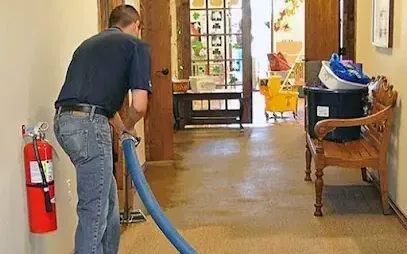
Extraction is the step that removes liquid water so the drying equipment is not fighting a puddle. A wet vacuum moves a little; a truck-mounted unit pulls hundreds of gallons from carpet, pad and hard floors, and a weighted extraction tool presses out water that a wand alone leaves behind. Every gallon pulled out now is a gallon the dehumidifiers never have to evaporate.
How water extraction and removal is handled, step by step
Assess
Find the source and the water category.
Extract
Truck-mounted or portable units clear standing water.
Map
Meters trace water under floors and into walls.
Hand off
Drying equipment set to the moisture map.
When extraction comes first
Any time water stands on a floor or squishes underfoot in carpet: a split supply line, a water heater that let go in the garage, an appliance hose, a roof leak that pooled on a slab or storm runoff across a threshold. On a concrete slab, water spreads sideways under flooring and into wall bottoms, so the crew extracts first and then reads the walls.
Water still standing on the floor? An extraction crew rolls 24/7.
Ask about truck-mounted extractionCarpet, pad and hard floors
Carpet over pad can sometimes be saved when clean water is caught early: the pad is pulled, the carpet is extracted and floated, and air movers dry it in place. Gray or black water means the pad and usually the carpet come out. Laminate and engineered wood trap water underneath and are often lifted. Tile and concrete are extracted, then dried with dehumidifiers.
What happens after extraction
The moisture map shows where water went after the surface was cleared. Air movers and LGR dehumidifiers go in, readings are logged daily and the structural drying plan runs until materials reach a dry reference. The EPA WaterSense program explains how household leaks add up, and the California Department of Insurance explains how to raise a question about a claim.
First steps when water extraction and removal shows up
Stop the source
Close the main shutoff or the fixture valve so no new water reaches the floor.
Kill power to wet rooms
Switch off breakers for wet areas if the panel is dry and safe to reach.
Lift what you can
Move rugs, boxes and furniture legs off wet carpet onto blocks or foil.
Photograph the water line
Capture standing water and the wet edge on walls before extraction starts.
What does water extraction and removal cost in Ramona, CA?
Water extraction typically runs $1,200 to $3,500 for one or two rooms of clean water, and more when the water is gray or black or reached several rooms. Square footage, carpet and pad, and the water category set most of the cost.
One or two rooms
- Truck-mounted extraction
- Pad removal if needed
- Moisture map
Several rooms or a hallway
- Carpet and pad decisions
- Baseboards pulled
- Drying setup
Contaminated or whole level
- Category 3 removal
- Antimicrobial
- Extended drying
What moves the number
Ranges are typical, not a quote. Water category, square footage, material class and how fast drying started move the total most. Run the water damage cost calculator for a closer range.
Water extraction and removal across the Santa Maria Valley and the backcountry
Ramona Water Damage Restoration covers ZIP 92065 across the Santa Maria Valley, from Main Street and the junction of State Route 67 and State Route 78 out to San Diego Country Estates in the San Vicente Valley, Mt. Woodson, the Ballena Valley and the ranch roads off Dye Road and Warnock Road.
Nearby coverage reaches Alpine, Valley Center, Julian, Santa Ysabel, Wynola, Four Corners, Fernbrook and Poway.
Related water damage services nearby
Water Extraction and Removal questions, answered
How is water extraction different from drying?
Extraction removes liquid water with pumps and extractors. Drying removes the moisture left inside materials with air movers and dehumidifiers. Extraction comes first because it is far faster than evaporating the same water.
Can wet carpet be saved after extraction?
Sometimes. Clean water caught within a day or two often allows the carpet to be extracted and dried in place after the pad is removed. Gray or black water, or carpet that sat wet longer, usually comes out.
Is a shop vacuum enough for standing water?
For a small spill on tile, it can be. For carpet, pad or water that reached wall bottoms, a shop vacuum leaves most of the water behind, and the moisture spreads while the floor looks dry.
How long does water extraction take?
Most rooms take a few hours of extraction during the first visit. The drying that follows usually runs three to five days for a contained loss, longer for slabs and soaked walls.
What does water extraction cost in a typical home?
Extraction for one or two rooms typically falls in the $1,200 to $3,500 range, with larger or contaminated losses higher. The category of water and the square footage set most of the price.
Standing water does more damage the longer it sits
Get extraction and a moisture map started before the water wicks into walls and cabinets.
(888) 450-9281Have the water pulled tonight