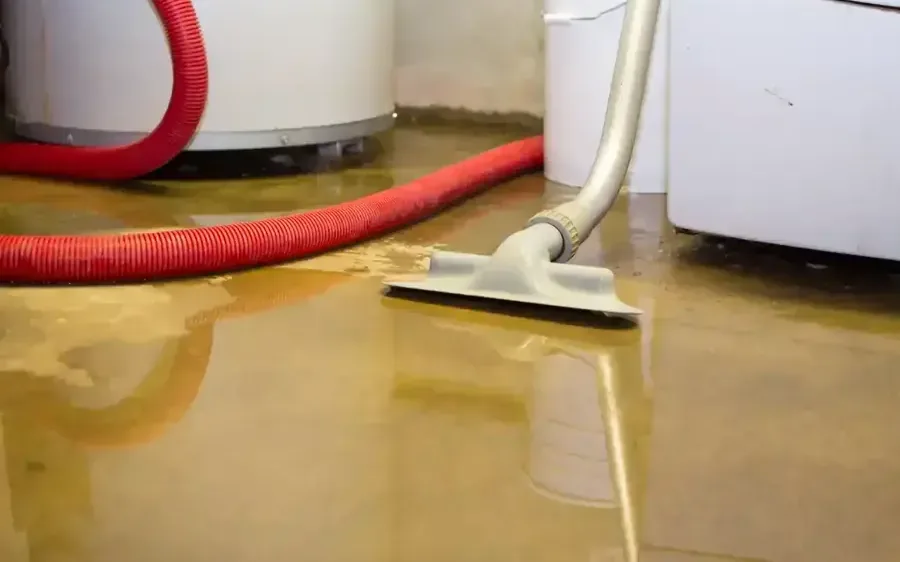
A tank water heater holds enough water to soak a garage floor, a closet and the rooms next to it. When the tank fails, the same questions come up for owners and for renters: how to stop it, who to tell and what gets dried.
Key takeaways
- A failing tank can put a full tank of water on the floor, and the water spreads through walls, cabinets and stored items.
- At the 2020 census, 70.1% of occupied Alpine homes were owner-occupied and 29.9% were renter-occupied, so both owners and tenants face tank failures.
- The first move is shutting off the cold water supply to the tank, then cutting power or gas to it for safety.
- Extraction comes first, then wet materials near the tank are removed or dried, and moisture readings decide when drying is done.
- A tenant tells the property owner right away and keeps photos, and an owner keeps the same records for an insurer.
How a water heater tank fails
A tank water heater holds a large volume of water. When the steel shell corrodes through, a seam opens or a fitting fails, that water can reach the floor quickly.
Small leaks give hints first: a damp patch at the base, rust stains near fittings or a puddle that returns after it is wiped away. Larger failures show up as a flood around the tank.
Sediment builds up at the bottom of a tank over time and can speed corrosion. Older tanks tend to fail from the inside out, with little warning.
A leak at a connection is different from a leak through the shell. A loose fitting can be tightened or replaced, while a leaking shell means the tank is finished.
Tanks sit in garages, closets and utility rooms, and each location sends water somewhere different.
- Garage: water spreads across the concrete and can reach stored boxes and the door to the living area
- Closet: water enters wall framing and runs under carpet or flooring
- Utility room: water reaches flooring and cabinets nearby
Owners and renters face the same leak
At the 2020 census, Alpine had 5,532 housing units, and 95.8% of them were occupied. There were 5,299 households, with an average household size of 2.75.
Of occupied homes, 70.1% were owner-occupied and 29.9% were renter-occupied. That is about three in ten occupied homes lived in by renters.
A tank failure raises different questions for each. An owner decides on repairs and files any claim, while a tenant stops the water if possible, tells the property owner and keeps a record.
Either way, the water on the floor is the same, and so is the drying.
First steps when a tank leaks
Speed matters, but safety matters more. The tank holds hot water, and a gas or electric heater adds its own hazard.
The cold water supply valve is usually on the pipe above the tank. A hot tank should not be drained carelessly, since the water can scald.
- Shut off the cold water supply valve on the pipe feeding the tank
- Turn off power at the breaker for an electric heater, or the gas control for a gas model
- Keep people and pets away from standing water that could touch outlets
- Move stored boxes, shoes and electronics off the floor
- Photograph the tank, the water and the damage before any cleanup
What the cleanup does
The work follows the water. A water heater leak cleanup starts with removal of standing water and ends with readings that show every material is dry.
Extraction
Water is pulled from floors and carpet with portable and truck-mounted units. In a garage, the slab is cleared quickly because stored items sit directly on it.
The crew also checks the garage door seal, adjoining rooms and any utility closet for water that traveled beyond the room with the tank.
Wet walls and cabinets
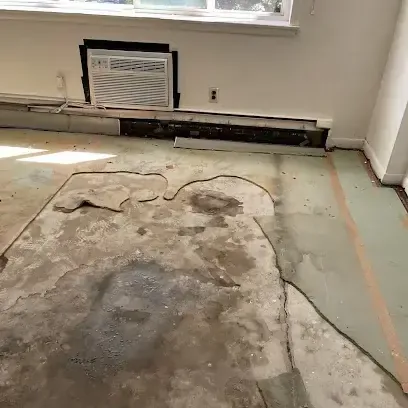
Drywall behind a closet tank often wicks water up from the floor. Moisture readings show how high the wetness climbed, and the lower section of drywall is opened if needed.
- Baseboards are pulled so the wall bay can dry
- Cabinet toe kicks are removed when water reached them
- Insulation behind the tank is checked and replaced if wet
Drying and confirmation
Air movers and dehumidifiers run until readings match a dry reference. This is the work of structural drying, and it ends with numbers, not a guess.
What belongings can be saved
Sorting what to keep comes after the water is out. Photographs of each item before it is moved or thrown away support a claim.
- Solid wood furniture can often be dried and kept
- Cardboard boxes, particle board shelving and mattresses that sat in water are usually discarded
- Electronics that sat in water should stay unplugged until they are checked
- Photos and papers are separated and air dried as soon as possible
Steps for tenants and for owners
The leak is the same for both, but the next steps are not. Records matter most when more than one party is involved.
For a tenant
A tenant stops the water if it can be done safely and tells the property owner or manager right away. Putting the report in writing creates a dated record.
- Attach dated photos to the message
- Keep receipts for emergency costs
- Ask in writing who is arranging the cleanup and the drying
- Check whether a renters policy covers belongings
For an owner
An owner documents the damage and arranges both the tank replacement and the cleanup. The two jobs are separate and can run at the same time.
- Photograph the tank, its label and the damaged areas
- Arrange a plumber to replace the tank
- Keep the drying log and the final readings
- Read the policy wording for water damage from appliances
Records and coverage
Coverage for a tank failure depends on the policy and the cause, and some policies treat the tank and the resulting damage differently. The wording is worth reading before any claim is filed.
Renters policies commonly cover belongings, while an owner policy covers the structure. Which one applies to a given loss depends on the policy wording.
A short written list of removed materials, plus dated photos and the final readings, gives an insurer a clear picture. More on appliance leak water damage and the local services is under Alpine water damage restoration.
Questions
Can a leaking water heater be repaired?
A tank that leaks from the shell is normally replaced rather than patched. The water on the floor is a separate cleanup job.
Who pays for the damage when a tank fails in a rental?
That depends on the lease, the cause and the insurance policies involved. A tenant should tell the property owner right away and keep records.
Is hot water from a tank dangerous to walk through?
It can be hot enough to scald, and standing water near outlets is a shock risk, so people stay out until the power is off.
Can drywall behind a closet tank be saved?
Sometimes. Readings show how far water climbed. Firm drywall can dry in place, and soft or crumbling drywall is cut out.
Should wet boxes in a garage be kept?
Cardboard soaks up water and holds it, so wet boxes are usually discarded after the contents are photographed.
How long does drying take after a tank leak?
It depends on the volume of water and the materials it reached, and readings decide when drying ends. A drying time estimator gives a rough range.