For Julian's Main Street, a water main break is more than an inconvenience. News reports describe closed restaurants, muddy shops and a town without water for nearly two days.
Key takeaways
- The Julian Community Services District supplies water to the 271-acre downtown area, with 208 customers, and has said its recurring problem is aging infrastructure and pipes installed incorrectly more than 50 years ago.
- A deli manager told ABC 10News that the pipes broke 7 times in 5 years, and a 2024 break damaged a Main Street market and deli.
- An April 2026 break left parts of town without water for nearly two days and forced restaurants to close.
- The district says it cannot promise delivery of water and advises customers who need an uninterrupted supply to keep emergency supplies, so a continuity plan is part of running a business here.
- When a break sends water or mud into a shop, the order is stop the water, extract, protect stock, dry and document.
What the reports say about the water mains
The Julian Community Services District is a public agency formed in 1964 to supply water to the 271-acre downtown area. It reports 208 customers and manages wells, tanks, pipelines, connections, valves, pumps and chlorination stations.
The district told ABC 10News that the town's recurring main problem is aging infrastructure and pipes that were installed incorrectly more than 50 years ago.
A Main Street deli manager told the station that the water pipes in the area broke 7 times in 5 years. A break in 2024 damaged a Main Street market and deli.
In April 2026, a break left parts of town without water for nearly two days and forced restaurants to close.
ABC 10News also reported that a break shut down several businesses and caused water pressure problems for residents.
Why a break hurts a tourist street
Tourism and agriculture, with an emphasis on apples, are the town's main employment sectors, and most businesses are oriented to tourism rather than local services.
The district describes the town as the B&B capital of Southern California, with specialty shops, wineries and two gold mines. Lodging, tasting rooms and shops all depend on running water for guests, cleaning and restrooms.
For that kind of street, a closed day is lost revenue from visitors who do not return that week. A restaurant cannot cook, wash or open its restrooms without water.
A resident of 25 years told ABC 10News that breaks can damage businesses and leave them muddy. Mud, not just water, is what a shop owner may find after a main fails near the building.
Even a short outage means no dishwashing, no hand washing for staff and no ice machines, so many kitchens close even when nothing floods.
When the break floods or muds the building
The first priority is safety, and the second is limiting how far the water travels.
Stop the water and make the space safe
Water that is still entering has to be stopped before cleanup can mean anything.
- Close the building's own shutoff valve if water is still entering
- Turn off power to wet areas and to equipment standing in water
- Keep staff and customers out of mud and standing water
- Photograph everything before stock is moved
Extraction and mud removal
Water is pulled from floors first, then mud and silt are shoveled and rinsed while they are still soft. Dried mud grips floors, baseboards and grout and holds moisture.
Materials that took in muddy water, such as carpet and low drywall, are removed instead of dried. Water extraction is where the cleanup begins.
Protecting stock and fixtures
Food, paper goods and fabric lose value fast when wet. Stock is lifted, moved to dry spots and counted before cleanup, so the loss list is accurate.
Sorting what can open and what cannot
A kitchen, a food preparation area or a restroom that took in muddy water cannot reopen until it is cleaned and cleared. Dry retail space elsewhere in the building may open sooner, depending on where the water went.
Rules for reopening a food business are set by health officials, not by the cleanup crew. The crew's job is the cleaning and the drying.
Planning for an outage without a flood
A break does not have to flood a shop to hurt it. The district says it cannot promise delivery of water, takes on no liability for damage from an interruption and advises customers who need an uninterrupted supply to keep adequate emergency supplies.
The April 2026 outage lasted nearly two days. A plan for that length of time is realistic advice for any business on Main Street.
Staff need clear instructions: who shuts the valve, who notifies the property owner and who photographs the premises.
Customers also need to be told. A note on the door and a message on the business's own social pages are cheap ways to explain a closure.
- Know where the building's shutoff valve is, and test it
- Keep drinking water and sanitation supplies for staff
- Decide in advance when to close and how to tell customers
- Keep a list of refrigerated stock that spoils without power or water
- Check taps and equipment for leaks after pressure returns
Drying a shop or restaurant in phases
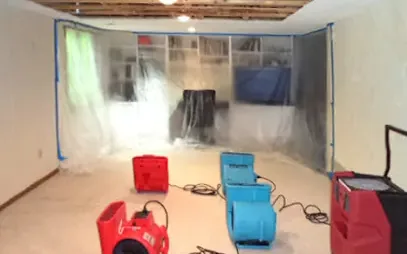
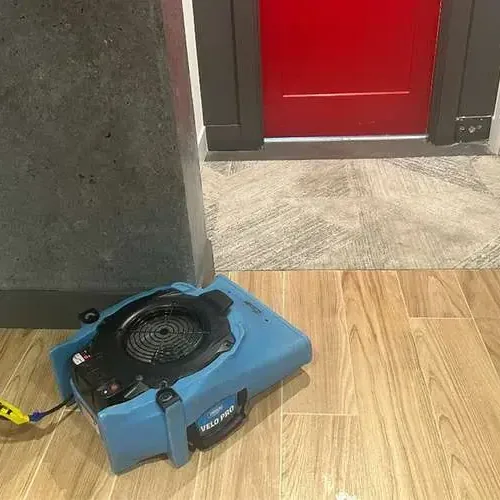
Commercial drying usually works in phases so part of the building can reopen. Equipment is placed zone by zone, and readings show which zones are dry enough to release.
Many Main Street buildings are Victorian in style, and readings, not appearance, show whether a wall is dry. Commercial water damage work and structural drying share that approach.
Equipment is shared between zones as readings fall, which keeps the noise and the cost down.
- The entry and retail floor first, so customers can return sooner
- Kitchens and food areas only after cleaning and passing readings
- Storage and back rooms last, unless stock is at risk
Records that help with a claim
Dated photos, a stock list with values, the drying log and notes on lost days all belong in the file.
A business owner should ask what the policy says about water damage, business interruption and outages, since coverage varies by policy. In a leased space, the lease terms also show who handles which part.
Local detail is under local water damage restoration.
- Photos of the premises before cleanup
- A stock list with quantities and values
- The drying log and final readings
- Notes on the days lost and the reason
Questions
How often have the pipes broken?
A deli manager told ABC 10News that the water pipes in the area broke 7 times in 5 years.
Does the district serve the whole town?
No. It serves the 271-acre downtown area, with 208 customers.
Can a shop be dried without closing?
Often in phases. Zones are dried and released as readings allow, though a muddy or contaminated area may need to stay closed.
What should an owner do first after a break floods the shop?
Close the building's shutoff if water is still entering, make the space safe, photograph the damage, and then arrange extraction.
Is business interruption covered?
That depends on the policy. The policy wording, not the cleanup crew, decides what is covered.
Does mud change how cleanup is done?
Yes. Mud carries soil and contamination, so porous materials that took in muddy water are removed, and hard surfaces are cleaned before drying equipment is set.