A sewage backup turns a drain problem into a health problem. The water that comes up through a floor drain, tub or toilet is contaminated, and it needs a different response from a clean water leak.
Key takeaways
- Sewage backup water is Category 3, the most contaminated class, and it is never treated as ordinary spilled water.
- Stop using water, keep people and pets out, and avoid walking through the affected area.
- Porous materials that touched sewage, such as carpet, pad and low drywall, are removed, and hard surfaces are cleaned and treated.
- The Ramona Municipal Water District is the local agency for water and sewer service within its boundaries, so it is the place to ask whether a problem sits in a district main or inside the house.
- Photos taken before cleanup and a log of removed materials support an insurance claim.
What makes sewage different
Sewage water carries bacteria, viruses and other organisms. That puts it in Category 3 under the industry water damage categories, along with floodwater from outside.
Category 1 is clean water from a supply pipe, Category 2 carries some contamination, and Category 3 is grossly contaminated. Sewage is Category 3 from the first moment.
A clean water leak can often be dried in place. Sewage cannot.
Materials that soak it up are usually thrown away, and the surfaces that stay are cleaned and treated.
Time also works against the house. Contaminated water spreads odor and contamination into carpet, pad, drywall and cabinet bases the longer it sits.
First steps for a household
The first hour of a backup is about limiting exposure and limiting the volume of water. These steps apply to nearly every case.
These steps are short on purpose. The fastest way to make a sewage backup worse is to keep using the plumbing, so the list starts there.
- Stop using sinks, tubs, showers, toilets and the washer until the blockage is understood, since each one sends more water down the same drain
- Keep children, pets and anyone with a weakened immune system out of the area
- Avoid touching the water with bare skin, and use rubber boots and gloves if something must be moved
- Turn off power to the affected room if water reaches outlets and the panel can be reached safely
- Photograph everything before it is touched
Where the blockage may sit
Finding the source decides who fixes the pipe. Cleanup does not have to wait for the answer.
A quick check points to the likely side of the property. If only one fixture backs up, the cause is usually a branch drain.
If every drain in the house runs slow or backs up at once, the problem may sit farther along in the main sewer pipe.
Inside the home
A blocked branch drain, a collapsed section of pipe or tree roots on the property can push water up through the lowest fixture. That is often a floor drain, shower or tub on the lowest level.
A plumber clears or repairs this part of the system. Who owns the pipe between the house and the main can differ, so the district or a plumber can confirm it.
- Grease and wipes building up in a branch drain
- Tree roots entering joints in an older pipe
- A collapsed or sagging section of pipe
- A fixture drain clogged by a foreign object
In a district main
The Ramona Municipal Water District is the local agency for water and sewer service within its boundaries. When several homes on one street back up together, a main may be involved, and the district is the right place to ask.
The district answers questions about its own system. The water inside the house is a separate job.
What cleanup removes and treats
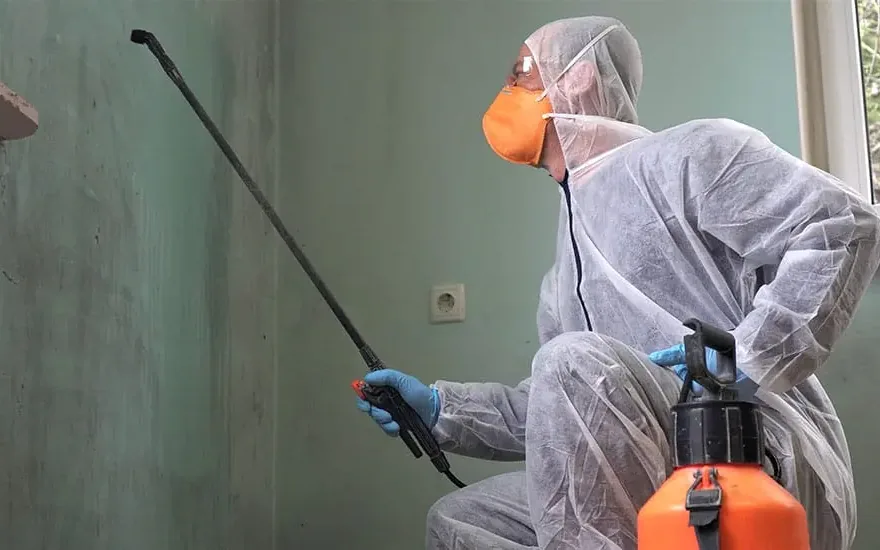
Containment comes before heavy work. Plastic sheeting and air control keep dust and spray out of clean rooms while the affected area is opened.
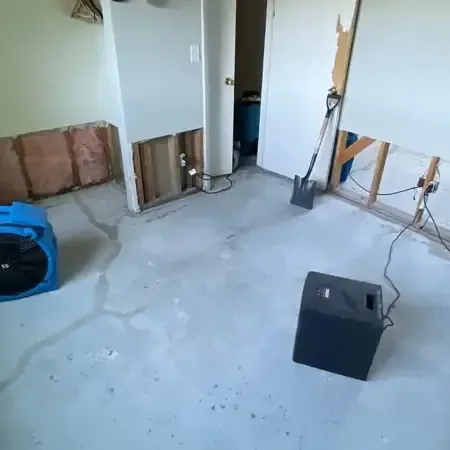
Cleanup starts with extraction of standing water and then moves to removal. Containment keeps the mess from spreading to clean rooms.
Concrete, tile, framing and other hard surfaces are scrubbed and treated with a disinfectant. Drying equipment follows, and readings confirm when the structure is dry through structural drying.
Odor control comes last. Deodorizing before the source material is removed only masks the smell.
- Carpet, pad and rugs that sat in sewage
- Drywall and baseboards the water wicked into
- Insulation in wet wall bays
- Cabinet toe kicks and particle board that swelled
Health and safety around sewage
Contact with sewage can make people sick, so protective gear and hygiene matter as much as the cleanup itself.
- Gloves, rubber boots and eye protection are standard for anyone handling contaminated materials
- Children and pets stay out of treated rooms until cleaning is finished and readings are dry
- Food and dishes that touched contaminated water are discarded
- Hands are washed with soap after any contact, using a sink that is not affected
Why speed still matters
Mold can start on wet materials within 24 to 48 hours, and contamination keeps moving into porous surfaces while the water sits.
Waiting for a plumber's schedule before starting extraction only gives the water more time. Water extraction can run while the plumbing repair is arranged, as long as the area is safe.
Porous materials that sit in contaminated water longer are more likely to be a total loss, which is why removal does not wait.
Claims and records
Photos, the list of removed materials, the plumber's invoice and the drying readings all belong in the file.
Coverage for a sewage backup varies by policy, and some policies treat it as an add-on, so the policy wording is worth checking early. A sewage backup cleanup crew documents the work as it goes.
A written scope of work, a list of removed items and the final readings give the insurer a clear picture of what was done.
Once drying is complete, rebuilding replaces drywall, baseboards, carpet and pad. The readings, not the calendar, decide when rebuilding is safe to start.
Questions
Is sewage backup water the same as flood water?
Both are Category 3. Sewage carries waste directly, while floodwater carries soil and outdoor contamination, but each is handled as contaminated water.
Can carpet be saved after a sewage backup?
Not usually. Carpet and pad act like sponges, and contamination cannot be cleaned out reliably, so they are removed.
Who is responsible for a clogged sewer pipe?
That depends on where the blockage sits. The district can answer questions about its own mains, and a plumber can find where the problem is on the property.
Should the water be shut off during a backup?
Stopping the use of fixtures matters more than shutting off the supply. The supply can stay on unless a pipe is leaking.
Can cleanup start before the plumber finishes?
Yes. Extraction and removal can start while the plumbing repair is arranged, as long as the area is safe.
How long does sewage cleanup take?
It depends on the volume, the materials and the drying. Extraction and removal come first, and drying runs until the readings match the dry reference.