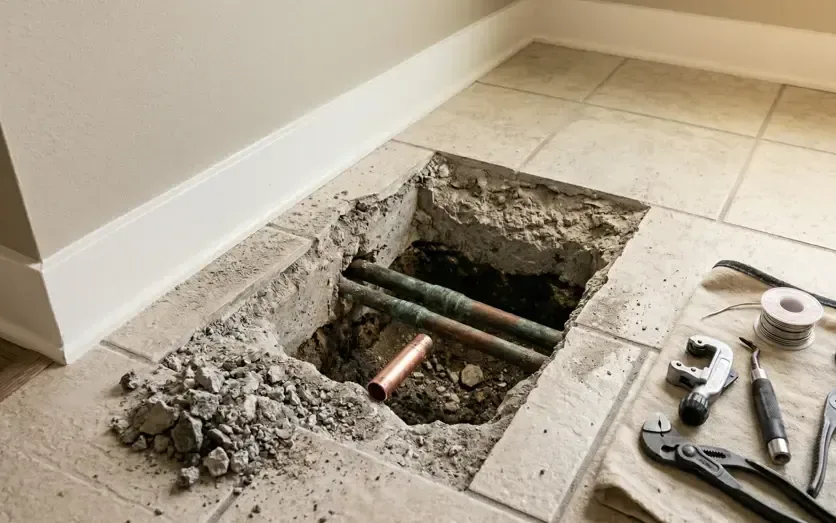
A slab leak is a failure in a pressurized pipe under a concrete floor, so the water keeps arriving while it works its way to the surface somewhere else. Many Ramona homes sit on slabs, and the first sign of trouble is often a small one.
Key takeaways
- A slab leak is a leak in a pressurized supply pipe under a concrete floor, so water keeps arriving until the supply is shut off.
- Warm patches on the floor, the sound of running water with every fixture off, damp baseboards and a water meter that keeps turning are the common warning signs.
- In the Ramona Community Planning Area, 82.71% of housing units were built in 1970 or later and 55.1% in 1980 or later, an era of slab and raised-floor homes with copper supply pipe.
- The leak is traced first, then the flooring over it is opened, then the slab and anything wet around it are dried.
- A plumber repairs the pipe, and the restoration crew removes the water and dries what it soaked. Both jobs are needed.
What a slab leak is, and why it hides
In many slab homes the supply pipes run through or under the concrete. When a joint fails or a copper wall wears thin, water under pressure escapes into the soil and the slab itself.
Because the water is under pressure, it does not simply stop. It looks for the easiest way up, through a crack, a joint at a wall or the edge of the slab.
That is why damage often shows up away from the leak. A damp corner, lifted floor planks or a stained baseboard may appear in a different room from the split pipe.
A leak in a hot water pipe can warm the floor above it, which is why a warm patch is such a useful clue. A cold water leak shows more often as dampness, a stain or a musty smell.
Warning signs inside a Ramona home
Slab leaks give hints before they give puddles. None of these signs proves a leak by itself, but two or three at once justify a check.
The slab leak warning check walks through the signs in order.
- A warm spot on a tile or wood floor with no heat source below it
- The sound of running or hissing water when every fixture is off
- A water meter that keeps turning with the whole house shut down
- Damp or stained baseboards, a musty smell or curling floor edges
- A water bill that climbs with no change in use
Why housing age matters
Housing records help explain why slab leaks come up. In the Ramona Community Planning Area, 82.71% of housing units were built in 1970 or later, and 55.1% were built in 1980 or later.
That places many homes in the era of slab and raised-floor construction with copper supply pipe. Copper lasts a long time, but water chemistry, pressure and age can eventually thin a pipe wall or fail a joint.
Housing age is only a probability. A newer home can leak, and an older one can run for decades without trouble.
Raised-floor homes behave differently. A supply pipe leak under a raised floor wets the subfloor and joists instead of soaking into concrete, so the damage is often easier to see from below.
How a leak is traced and opened
Tracing comes before any cutting, so the opening stays as small as the problem allows.
Locating the pipe
Listening gear and pressure checks narrow down which pipe run is leaking. The goal is a small, targeted opening, not a torn-up house.
Moisture readings on the floor and the base of the walls show where the water has traveled, which often differs from where it started.
Opening the floor
Flooring over the leak is lifted or cut back so the slab surface can breathe. What happens next depends on the material.
Moisture trapped under a floor covering keeps the slab wet, and a sealed floor can hide a leak for a long time. Opening it early limits the damage.
- Tile may be drilled or removed in the wet area
- Carpet and pad are pulled and discarded when they stayed wet for long
- Wood and laminate are lifted, since both swell and cup when moisture has nowhere to go
Drying the slab and what it soaked
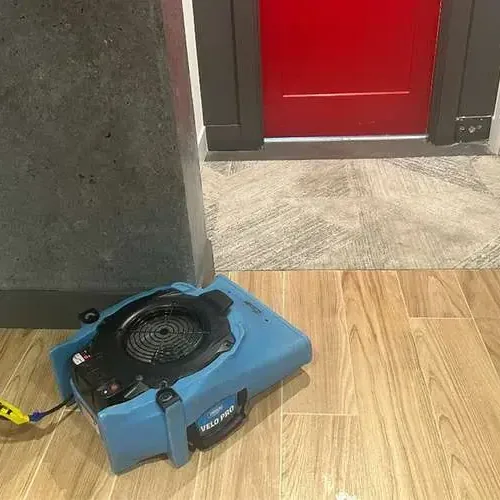
Concrete holds water longer than most materials. Air movers and dehumidifiers run until readings on the slab and the framing nearby match a dry reference, which is the work of structural drying.
Drying is slower than it looks. The slab is thick and dense, so surface readings can fall while the inside stays wet, which is why readings are taken at several spots.
Wet baseboards, the bottom of drywall and cabinet bases are checked and opened when needed. Insulation that took in water is removed.
The plumber repairs or reroutes the pipe, and the crew handles slab leak water damage around it. The two jobs overlap, and neither replaces the other.
- Dehumidifiers and air movers run for as long as the readings call for
- Readings are repeated on the slab, the walls and the framing
- Flooring goes back only after the slab reads dry
What to do when a leak is suspected
A few simple checks separate a real leak from a false alarm, and they cost nothing. The goal is to confirm the problem before anyone opens a floor.
- Close every tap and turn off every appliance that uses water, then watch the meter dial for movement
- Shut off the main valve if the meter moves and water is visible anywhere
- Photograph damp spots and mark their edges with tape so growth can be tracked
- Move rugs and furniture off any warm or damp patch
- Ask a plumber to confirm the leak with detection gear before any floor is cut
Cost, timing and what to keep
Cost depends on how far the water spread and what flooring sits above it. A water damage cost calculator gives a starting range.
The plumber's invoice, photos of any opened floor and the drying log are worth keeping. Together they show what failed and how it was handled.
Questions
Can a slab leak be fixed without opening the floor?
Sometimes the pipe is rerouted through walls or attic space, which avoids cutting the slab. Either way, flooring over wet areas is usually lifted so the slab can dry.
Will a slab leak go away by itself?
No. A pressurized pipe keeps leaking until it is repaired, and the damage spreads while it runs.
How is a slab leak different from a roof leak?
A slab leak comes from a pressurized supply pipe and can run all day. A roof leak depends on rain and stops when the rain does.
What happens to the flooring over a slab leak?
It depends on the type. Tile can sometimes stay, carpet and pad are usually pulled, and wood or laminate is often lifted so the slab can dry.
Does a slab leak always show on the surface?
No. Some leaks stay below the floor for a long time and only show as a higher water bill or a warm spot.
Is a slab leak covered by insurance?
Coverage depends on the policy and the cause. Many policies treat the pipe repair and the resulting water damage differently, so the wording matters.