Appliance and Supply Hose Leaks in Valley Center, CA
Washer, dishwasher and refrigerator leaks can run behind the appliance for a long time before anything shows. Moisture readings find how far the water spread, and the cabinets and floors are dried to match what was found.
(888) 450-9281Call about a soaked cabinet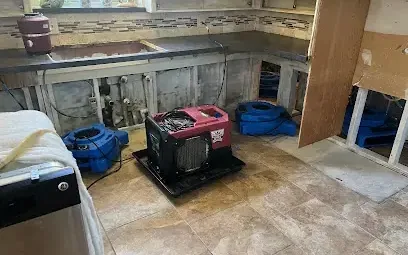
Appliance leaks are quiet. A cracked supply hose, a loose drain connection or a refrigerator water fitting can seep for a long time behind or under the machine, soaking cabinet bases, subfloor and the bottom of the wall before anyone sees a puddle. Readings, not the visible surface, show how far the water traveled, and that distance is what sets the size of the drying plan.
How appliance and supply hose leaks is handled, step by step
Stop the leak
The appliance supply is closed.
Map it
Meters show where water went.
Open and extract
Trim comes off, pooled water goes.
Dry it
Equipment runs to dry readings.
Typical hiding places
- Behind a washing machine and in its drain box
- Under a dishwasher, where the water enters the subfloor
- Behind a refrigerator with a water or ice supply
- Inside cabinet bases that hold the sink pipes
Pulling the appliance out and taking off the toe kicks usually shows the damage that surface checks miss.
A hidden hose leak keeps soaking the cabinet base and subfloor, so a quick moisture check protects the kitchen or laundry room.
Map the appliance leakHow the area is dried
The crew removes the affected trim, extracts any pooled water and places dehumidifiers and air movers to dry the cabinet base, floor and wall. Swollen particleboard cabinets that do not recover are replaced, while solid wood and tile are usually dried in place.
Keeping it from happening again
A plumber or appliance technician replaces the failed hose or fitting. For tank leaks, the water heater page covers a similar cleanup, and the Valley Center hub lists the rest.
First steps when appliance and supply hose leaks shows up
Shut off the supply
Close the appliance stop valve or the main so no more water leaks out.
Map the moisture
Meters check the floor, cabinet base and wall around and behind the appliance.
Open and extract
Toe kicks and wet trim come off and pooled water is removed.
Dry and verify
Equipment dries the area and readings confirm it is ready for repairs.
What does appliance and supply hose leaks cost in Valley Center, CA?
A single appliance leak caught early typically costs $1,200 to $2,500. A kitchen or laundry room moves to $2,500 to $4,500, and a long slow leak that soaked subfloor and cabinets can reach $6,500 or more.
One appliance, caught early
- Leak located
- Toe kicks off
- Fans placed
Kitchen or laundry room
- Cabinet bases dried
- Flooring checked
- Longer drying
Long slow leak
- Subfloor opened
- Cabinets replaced
- Extended readings
What moves the number
Ranges are typical, not a quote. Water category, square footage, material class and how fast drying started move the total most. Run the water damage cost calculator for a closer range.
Appliance and supply hose leaks across Valley Center and nearby communities
Appliance leak work covers ZIP 92082, including kitchens and laundry rooms in the newer homes of Park Circle and in rural properties. The 2020 census put the average household at 3.19 people, and the crew checks the rooms where appliances run most often.
The same service nearby: appliance and supply hose leaks in Ramona, Julian, Alpine.
Water damage restoration in Valley Center › · every community covered
Related water damage services nearby
Appliance and Supply Hose Leaks questions, answered
How can a leak behind an appliance go unnoticed?
The water soaks into the subfloor and cabinet base instead of pooling in view, so the first sign may be a soft floor or a musty smell.
Which appliances leak most often?
Washing machine hoses, dishwasher connections and refrigerator water fittings are common sources, along with drain connections under sinks.
Can cabinets be saved after a leak?
Solid wood often dries in place. Particleboard that has swollen usually does not recover, so the cabinet base is replaced after drying.
Does insurance cover a hose or appliance leak?
Sudden leaks are often covered for the resulting damage, though slow seepage over time may not be. The insurer decides, so photos matter.
Do I need to move the appliance?
The crew can pull it out safely to reach the floor and wall behind it, since surface checks miss the wet spots hidden there.
Should the water be turned off at the main?
If the appliance stop valve cannot be reached, closing the main is the safe choice until the failed hose or fitting is replaced.
Find the wet spots behind the machine
Share which appliance leaked and the crew will map the moisture and plan the drying.
(888) 450-9281Call about a hose leak